

Apple ignited the legal music-download revolution with iTunes, led again by dropping copy-protecting DRM from its music downloads, and in 2007 led a major upgrade in digital-music quality with the launch of iTunes Plus.
But more than a decade later, the company finds itself as a music-streaming laggard, to borrow a term that Steve Jobs used to throw around a lot. When it comes to music quality, Apple’s not streets ahead—it’s streets behind.
It’s time for Apple Music to get a huge upgrade—and some recently-launched Apple technologies could even allow it to surpass its rivals when it comes to audio quality.
The facts about audio quality
This week Spotify became the latest music service to jump on the high-quality audio bandwagon, joining Amazon, Tidal, and other services in offering lossless audio to subscribers.
Just to back up for a moment. Most digital music, whether it’s downloaded or streamed, uses data-compression algorithms to reduce file size. This was desperately important back in the days where storage space on music playback devices and internet bandwidth were both limited.
Those algorithms generate files much smaller than the original master track, but at the price of some audio quality. At low bit rates, everything sounds muffled. At the most common early MP3 era bit rates, music sounded pretty good, but if you listened closely you could hear weird artifacts. For me, it they were always obvious on cymbals—that shimmering percussion became a wash of random white noise.
Apple’s introduction of iTunes Plus doubled its standard bit rate. Today, that’s the default audio quality of Apple Music. Spotify’s default quality today is in the same range—if you’ve got a paid account. (Free accounts get access to a much lower-quality stream.)
All these compression algorithms are called “lossy” algorithms because they throw away audio detail in exchange for smaller file sizes. But there’s also a different method of shrinking audio files called lossless compression. The files are much larger (though still a lot smaller than uncompressed audio files!), but they throw no information away from the original “CD quality” audio file.
Personally, I think current streaming bit rates are pretty good. Only the most discerning ears will be able to tell the difference between a high-bit-rate lossy file and a lossless one. Still, some people will be able to tell—and others will feel better knowing they’re getting the original sound, even if they’re not sure if they can hear the difference.
Behind the curve
Regardless of the actual appeal of high-resolution audio to a broad audience, the fact remains that Apple is currently behind all its competitors. It will lead to a perception that Apple doesn’t care as much about audio quality as Spotify—and that’s not great for competition, even if most people won’t see the value in paying for a lossless version of their music library.
That’s why it feels inevitable that Apple will have to upgrade its streams and offer a high-quality version, presumably encoded with Apple’s own lossless encoding codec, ALAC. The company can’t allow Spotify to seed the perception that Apple Music is second rate when it comes to audio quality.
If Apple does this, it’ll probably charge extra for access to high-quality streams, though perhaps they’ll be rolled into some of its Apple One bundles, especially the high-end Premier bundle.
Going beyond lossless
But I think Apple can leapfrog Spotify, and it can be aided in this effort by some of its recent work on the hardware side of its business. Not only are the AirPods Pro and AirPods Max pretty good quality headphones, but they now support Spatial Audio, which decodes multi-channel audio from movies and TV shows and positions sounds in space around the listener.
For years now, the music industry has been experimenting with multichannel audio. I bought a few DVD-Audio discs in the 2000s that offered high-quality audio and a movie-style 5.1 audio mix playable on my home-theater system. Those disc-based audio formats flopped, but the ones I bought sounded great, and made me a believer that multichannel audio could be popular if conditions were right.
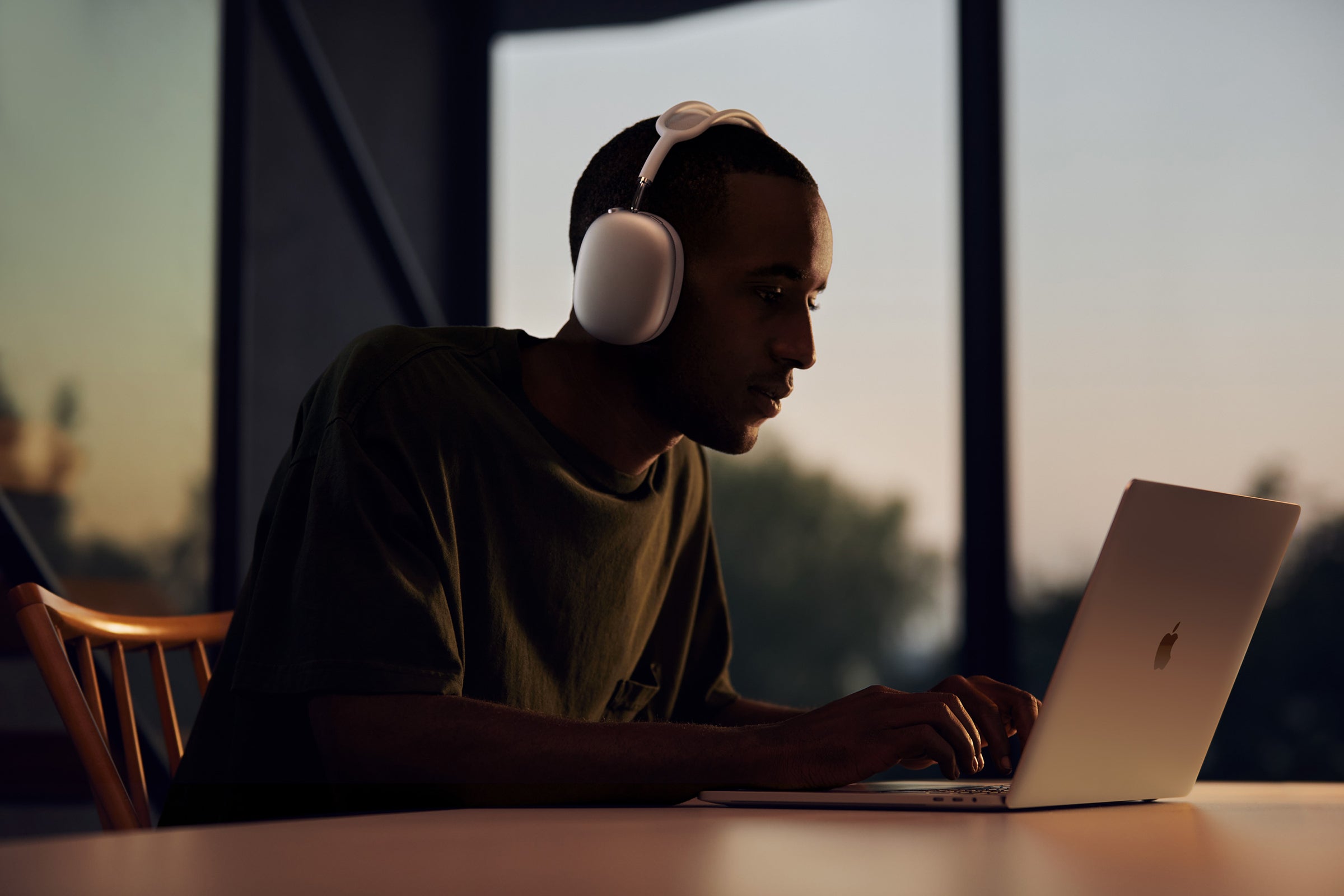
Apple Music could offer access to multichannel audio and combine it with AirPods Pro or AirPods Max to provide a unique audio experience.
Between AirPods and the Apple TV, Apple has access to multichannel audio output in people’s ears and potentially in their living rooms, if they’ve got home-theater speakers or a soundbar connected.
Imagine Apple Music offering access to multichannel audio that, combined with AirPods Pro or AirPods Max, can provide an audio experience that goes way beyond lossless audio in plain old stereo.
The pieces are there. Apple’s probably got the clout (and the cash) to encourage record companies to release multichannel mixes. And it would put Apple back in a position of leadership, instead of where it finds itself this week—behind Spotify and just about everyone else.
Note: When you purchase something after clicking links in our articles, we may earn a small commission. Read our affiliate link policy for more details.